PLR and MRR Meaning: Cut Through the Confusion and Start Using PLR and MRR Digital Products the Right Way
Last updated July 2026
Let's be honest — if you've spent any time exploring the digital product space, you've probably stumbled across the terms PLR and MRR more times than you can count. Maybe you saw them mentioned in a Facebook group, heard about them in a YouTube video promising easy money, or spotted them in someone's shop description.
And if you're like most people? You clicked away more confused than when you started.
Here's the thing: that confusion isn't on you. PLR MRR digital products are genuinely powerful tools for building a digital product business, but they're also two of the most misunderstood terms in the entire industry. Outdated information gets passed around like gospel, and even experienced sellers sometimes get the details wrong.
That stops today.
By the time you finish this guide, you'll know exactly what PLR and MRR digital products are, what rights you actually have when you buy them, and how to use them ethically and strategically to build a real business. No hype. No shortcuts. Just a clear, honest breakdown of how all of this actually works.
Whether you're brand new to selling digital products or you've been at it for a while and want to make sure you're doing things right, this guide is for you. Let's dive in.
What Are PLR Digital Products?
PLR digital products are ready-made digital files — think e-books, templates, online courses, planners, and more — that come with a special license giving you permission to edit, rebrand, and sell them as your own. Instead of starting from scratch, you're buying existing content along with the rights to make it yours.
The specific permissions vary depending on who you buy from, but the whole point of digital PLR is to give you a serious head start on product creation without staring at a blank screen wondering what to create next.
So how does that actually work? Let's break it down.
The Definition of Private Label Rights
PLR stands for Private Label Rights. At its core, it's a license that lets you take someone else's created content, put your name on it, customize it however you like, and sell it as your own product.
Think of it like buying a blank-label product from a manufacturer. They made it, but you get to brand it, package it your way, and sell it under your own name. That's the "private label" part.
Now, here's what's important: when you buy a PLR product, you're not buying the copyright. The original creator still owns that. What you're buying is a license — basically a set of permissions that tells you what you're allowed to do with the content.
Those permissions typically include the right to edit the content, rebrand it with your name and logo, and resell it to your audience. PLR allows you to treat the content like it's yours, within the boundaries the seller sets. But — and this is key — those boundaries depend on the individual PLR license. We'll come back to this throughout the guide, because understanding your license is everything.
Common Types of PLR Products
PLR content comes in all kinds of formats. Here are some of the most popular:
- PLR ebooks and guides — long-form content you can sell, bundle, or repurpose
- Templates — done-for-you frameworks for social media, email sequences, business planning, and more
- Online courses and workshops — pre-built educational content you can sell under your brand
- Planners and workbooks — printable or digital tools for productivity, goal-setting, wellness, you name it
- Swipe files and prompt packs — ready-to-use copy, captions, scripts, or AI prompts
- Graphics and Canva templates — visual assets for marketing or resale
The variety is part of what makes PLR so appealing, especially when you're just starting out. Instead of building every product from scratch, you're starting with a solid foundation and making it your own.
What PLR Does NOT Give You
This is where a lot of beginners trip up, so let's be crystal clear.
Buying a PLR product does not give you:
- Copyright ownership. The original creator still owns the copyright. You own the PLR rights to use the content within the terms they set.
- Exclusivity. Unless you specifically buy an exclusive license (which costs more), other people are buying and selling the same PLR content. Your job is to make yours stand out through customization and branding.
- The right to mislead people about authorship. You can put your name on a PLR product — that's literally the point — but pretending you created it from scratch in a way that deceives your audience crosses an ethical line worth respecting.PLR isn't limited to business and marketing resources. Faith-based templates, devotionals, and Bible study materials can also help churches, ministry leaders, and Christian content creators prepare resources for the people they serve. Learn more about how Christian creators use faith-based digital products.
Understanding what PLR is — and what it isn't — sets you up to use it well. Now let's talk about MRR.
PLR isn't limited to business and marketing resources. Faith-based templates, devotionals, and Bible study materials can also help churches, ministry leaders, and Christian content creators prepare resources for the people they serve. Learn more about how Christian creators use faith-based digital products.
What Are MRR Digital Products?
PLR and MRR often get mentioned in the same breath, and for good reason — both let you sell ready-to-go digital products without building them yourself. But MRR works differently in one important way, and understanding that distinction is key to using it correctly.
Let's break down what MRR digital products actually are and how they work.
The Definition of Master Resell Rights
MRR stands for Master Resell Rights. Like PLR, it's a type of license — but what makes it different is that it gives you the right to not only sell a product, but also to pass the reselling rights along to your buyers.
In plain English: when you sell an MRR product to a customer, they can turn around and resell the product too. That's the "master" part — the rights travel with the product through the reseller chain. You might also see this called master resale rights, and both terms mean the same thing depending on the seller.
A product with MRR is especially appealing if you want to sell digital products that your customers can also resell, which adds another layer of value for buyers. It also means you can sell the resale rights as part of the offer — something PLR licenses rarely include.
But here's the most important thing you need to understand about MRR, and I'm going to say it loud for the people in the back: there is no universal definition of MRR. Unlike some licensing frameworks with standardized terms, MRR means different things to different sellers. The permitted uses vary from license to license.
Assuming you know what an MRR license allows based on what you heard somewhere else? That's one of the most common — and costly — mistakes in this space.
The only way to know what your MRR rights include is to read the license.
How MRR Has Evolved
If you've been researching PLR and MRR online, you might've come across information saying that MRR products can't be edited or customized. That used to be true for a lot of older MRR licenses, and it's still repeated as fact all over the internet.
Here's the truth: it's outdated.
MRR typically included more restrictions in its earlier form, but many modern MRR licenses now include full editing and rebranding rights, letting buyers customize the content just like they would with a PLR product. MRR often comes with far more flexibility than people expect — but some licenses are still restrictive, and others fall somewhere in between.
The point? You can't assume either way. This is why reading the license isn't just a best practice — it's the foundation of using MRR products correctly and ethically.
Common Types of MRR Products
MRR products span a lot of the same formats as PLR. Common examples include:
- Online courses and training programs — especially popular in business, marketing, and personal development niches
- Digital toolkits and resource bundles — collections of templates, guides, and tools packaged together
- Ebooks and guides — educational content on specific topics
- Templates and done-for-you assets — social media, email, Canva, and business templates
- Stock videos and reels — short-form visual content for TikTok, Instagram, and more
- Software and digital tools — less common, but available in some markets
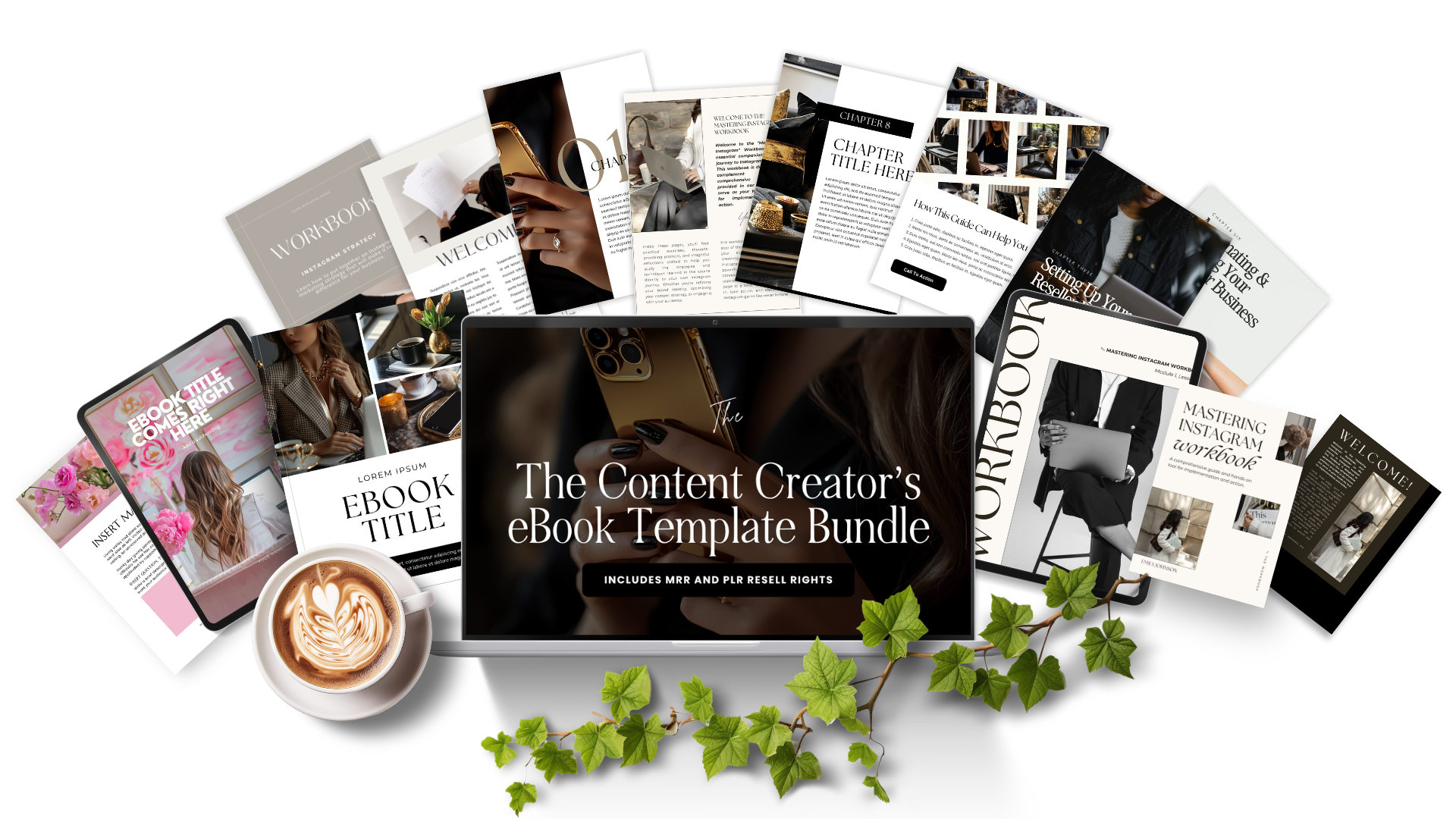 Want to explore a different kind of digital product? We broke down the practical everyday benefits of using and reselling Google Spreadsheets in our recent guide: The Power of PLR Google Spreadsheets.
What MRR Does NOT Automatically Give You
Because MRR licenses vary so widely, there's no single list of what MRR always or never includes. But here's what we can say clearly:
Buying an MRR product does not automatically give you:
- A guaranteed set of rights. Every MRR license is different. Don't assume editing, rebranding, or bundling rights exist unless the license explicitly says so.
- Copyright ownership. Just like with PLR, the original creator retains the copyright. You're buying a license, not the intellectual property itself.
- Permission to use the product in ways not stated. If something isn't addressed in the license, don't assume it's allowed. When in doubt, reach out to the seller before you buy or list anything.
PLR vs MRR — What's the Difference?
PLR and MRR get grouped together all the time, and while they share some common ground, they're not the same thing. Knowing where they overlap and where they diverge will help you choose the right model for your business — and avoid making assumptions that could get you into trouble.
Here's the clear breakdown.
Side-by-Side Comparison
Understanding the key differences between PLR and MRR helps you make smarter buying decisions and avoid costly mistakes. At a glance, they can look really similar — both involve buying the right to sell someone else's content. The difference between PLR and MRR lies in what you can do with the product and what rights you can pass along to your buyers.
| PLR | MRR | |
|---|---|---|
| Edit and customize | Yes, typically | Depends on the license |
| Rebrand with your name | Yes, typically | Depends on the license |
| Resell the product | Yes, typically | Yes |
| Pass resale rights to buyers | Rarely | Yes, this is the defining feature |
| Copyright ownership | No | No |
Important note: The PLR column reflects what most PLR licenses include, and the MRR column reflects what's common in modern MRR licenses. Neither is a guarantee. Always read the specific license for any product you buy.
When to Choose PLR Over MRR
PLR tends to be the better fit when:
- You want to deeply customize the content to match your brand identity and style
- You want to repurpose the content across multiple formats — turning an ebook into a course, a course into blog posts, or a guide into a lead magnet
- You're building a content-driven brand and want materials that feel original and specific to your audience
- Passing resale rights to your buyers isn't part of your business model
When to Choose MRR Over PLR
MRR tends to be the better fit when:
- You want to sell a product that your buyers can also resell, which can be a major selling point
- You find an MRR product with a license that fits your specific needs
- You want to offer your customers additional value in the form of reselling rights
- Your online business model involves selling to other digital product sellers or aspiring entrepreneurs
Can You Use Both Together?
Absolutely — and many successful digital product sellers do exactly that. Combining PLR and MRR lets you blend the deep customizability of PLR with the pass-along resale rights of MRR, giving your shop both variety and flexibility. You can browse our full collection of MRR and PLR digital products — every product includes both license types, so you don't have to choose between them.
Planners are one of the steadiest sellers in this category, and our MRR & PLR digital planners all ship with both sets of rights.
PLR and MRR aren't competing strategies. They're complementary tools. You might use PLR content to build out your core brand offerings and educational materials, while using MRR products to add variety to your shop or give your customers products they can resell themselves.
The key is building intentionally. Know what each product's license allows, know how each product fits your audience, and let that guide your decisions — not just what seems easiest or most profitable in the moment.
How PLR and MRR Digital Products Actually Work
At the heart of every PLR and MRR transaction is a license. Understanding how that license works — what it governs, who sets the terms, and how your rights flow from the original creator to you to your buyers — is what separates sellers who build sustainable businesses from those who run into problems down the road.
Before you buy your first product or list anything for sale, here's what you need to know.
How Licensing Works — and Why It's Everything
When you buy PLR MRR rights, what you're really buying is a license. That license is a legal document — sometimes one page, sometimes longer — that spells out exactly what you can and can't do with the content. These licensing agreements are set by the original creator and reflect their specific terms.
Here's the thing: there's no governing body that standardizes what PLR or MRR licenses must include. That means two products both labeled "PLR" can have completely different permitted uses, and the same goes for MRR.
Some common restrictions you might run into include:
- You may not distribute the product for free
- You may not upload the product to PLR content farms or mass-distribution sites
- You may not claim copyright ownership
- You may not resell the product below a certain price
- You may not use the product in certain types of bundles or memberships
None of these restrictions are universal. Some licenses will include them, others won't. The only way to know is to read the document before you buy — and before you sell.
The Reseller Chain Explained
Understanding how rights flow through the reseller chain helps clarify why the license matters so much.
Here's how it works:
Original creator — Content creators build the original product and set the license terms. They decide what buyers can do with it, including whether buyers can sell the resale rights downstream.
PLR or MRR seller — Buys the rights and lists the product in their shop, passing along the permitted rights to their buyers.
You — Buy the product and receive whatever rights the license grants, which you can then use within the stated terms. As the reseller, you're responsible for staying within those boundaries.
Your customer — Buys the product from you. Depending on the license, they may or may not receive reselling rights of their own.
The rights start with the original creator and flow downstream from there. If a seller passes along rights they don't actually have, or if a buyer uses a product in ways the license doesn't permit, the chain breaks down — and the buyer is the one left exposed.
This is another reason why buying from reputable sellers who provide clear, readable license documents matters so much.
Are PLR and MRR Products Legal?
Yes — PLR and MRR are completely legal business models when used within the terms of the license.
Buying a license to resell or rebrand someone else's content is a legitimate and long-established practice. It's not deceptive, it's not a loophole, and it's not going away. Countless small business owners and digital entrepreneurs have built real, sustainable income streams using PLR and MRR products.
That said, ethical use matters. Legal considerations aside, being transparent with your audience, representing your products honestly, and staying within your license terms are the foundation of a business worth building.
How to Make Money with PLR and MRR Digital Products
PLR and MRR products are tools — and like any tool, their value depends entirely on how you use them. There's no single right way to build a business around them, which is actually one of their biggest strengths.
Here are the most common and effective approaches, from the simplest starting point to longer-term strategies worth building toward.
Sell As-Is When the License Permits
The most straightforward way to start selling is to sell the product as-is — without altering the original content, exactly as you received it. This is especially common with MRR products and often appeals most to beginners because it removes the barrier of having to create or edit anything.
Done-for-you digital products are popular for a reason: they offer instant access to sellable content with minimal setup. If speed to market is your priority, this can be a smart starting point.
But before you list anything, confirm that your license explicitly permits resale without modification. Not all do.
Customize and Rebrand
If your license allows editing — which most PLR licenses and many modern MRR licenses do — customization is one of the most powerful things you can do to stand out in a crowded market. A customizable product is a competitive advantage, plain and simple.
At a minimum, this might mean updating the cover design, swapping in your brand colors, and adding your name. At a deeper level, it might mean rewriting sections, adding your own expertise, or restructuring the content to fit your audience's specific needs. Altering the original content to reflect your voice is how you create unique, premium content from a done-for-you starting point.
The more you make a product your own, the harder it becomes for a buyer to find the exact same product somewhere else for less. Rebranding is your competitive advantage when many sellers are working from the same source material.
Bundle Products for Higher Perceived Value
Bundling is one of the most effective ways to increase the perceived value of your offerings without creating anything from scratch. A well-designed digital products bundle can feel like a complete, cohesive solution rather than just a collection of files — and that difference matters to buyers.
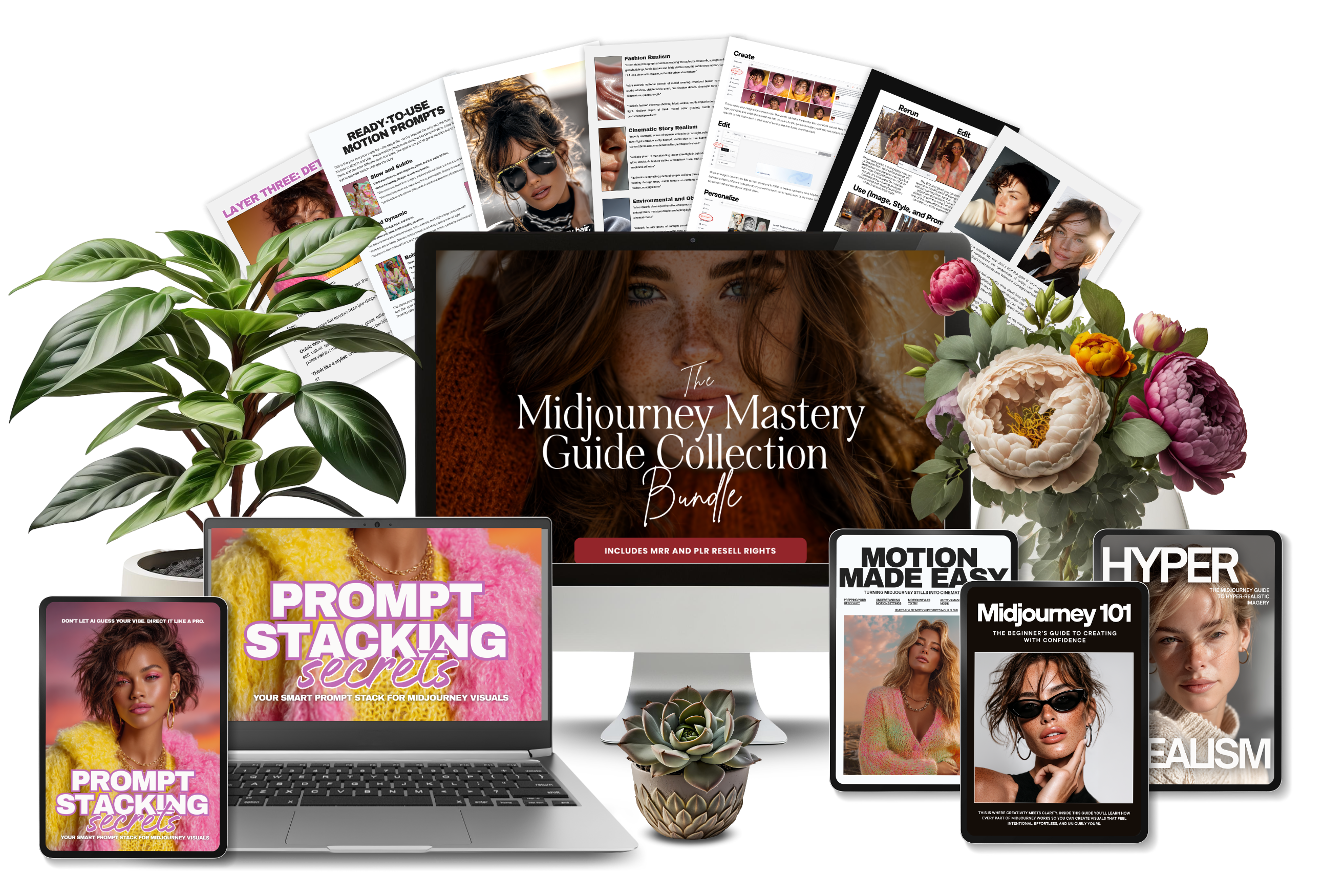
You might combine a PLR ebook with a set of Canva templates and a workbook to create a comprehensive toolkit. Or build a PLR MRR bundle that pairs an MRR course with a PLR resource guide that complements the material. Either way, a thoughtfully assembled bundle commands a higher price point and gives your shop a more premium feel.
Before bundling, check each product's license to confirm that bundling is a permitted use. Some licenses restrict this.
Use PLR as Lead Magnets or Bonuses
Not every PLR product needs to be a paid offer. Many sellers use PLR content as free lead magnets to grow their email list, or as bonuses that add value to a paid product or course.
A well-chosen PLR ebook or template pack can be an excellent way to give potential customers a reason to join your list or sweeten the deal on a purchase they were already considering. The ability to repurpose a single piece of content across multiple uses — lead magnet, bonus, blog post, email series — is one of the biggest advantages of working with PLR. That single piece of content can do a lot of heavy lifting for your business.
Again, check the license. Some PLR licenses restrict free distribution, meaning you can't give the product away without charge. If free distribution isn't permitted, use the product in a paid context instead.
Build a Shop Around a Niche
One of the most sustainable ways to use done-for-you products is to build a curated shop around a specific niche audience. This isn't just a side hustle strategy — it can become the foundation of a full online business.
Rather than selling a random assortment of products, you choose a niche — wellness, finance, parenting, digital marketing, for example — and build a shop where everything you offer speaks directly to that audience's needs. PLR and MRR give you the raw material to stock that shop and keep 100 percent of your product sales without having to build every product yourself.
The curation is the value. Anyone can buy a PLR pack. Not everyone takes the time to find the best products for a specific audience, customize them thoughtfully, and present them in a way that feels cohesive and trustworthy. That's how you build a shop worth coming back to.
Repurpose Content Across Formats
One underused strategy is to repurpose a single piece of PLR or MRR content across multiple formats. That single piece of content can become a blog post, an email sequence, a short-form reel, a TikTok script, and a lead magnet — all from the same source material.
This is one of the most efficient content creation strategies available when you're selling digital products, and PLR makes it possible without starting from scratch every time. When you're creating content for your audience, working from a strong PLR foundation means you're never staring at a blank page.
What to Look for When Buying PLR or MRR Products
Not every PLR or MRR product is worth buying, and not every seller operates with the same standards. Knowing what to evaluate before you buy protects your brand, your customers, and your business.
Here's what to look for.
Quality Indicators
Not all PLR and MRR products are created equal. The quality of PLR content in particular varies enormously — the market ranges from exceptionally well-crafted material to rushed, low-quality content that'll reflect poorly on your brand the moment a customer opens it.
Before buying, look for:
- Well-written content that's clear, accurate, and free of obvious errors
- Professional design that looks polished and is easy to read or navigate
- Current and accurate information — especially important in fast-moving niches like technology, finance, or health
- A coherent structure that actually delivers on what the product promises
If a seller offers a preview or sample, use it. The quality of the sample tells you a lot about what you're buying — and what your customers will experience when they open it.
Design quality is the hardest thing to judge from a product page. Here's how to spot aesthetic PLR that doesn't look generic before you buy.
License Clarity
A quality product paired with a vague or missing license isn't a quality purchase — it's a liability.
Before buying any PLR or MRR product, locate the license document and read it. A reputable seller will make the license easy to find, easy to understand, and specific about what is and isn't permitted. Look for a clear license to resell that spells out exactly what you can do — not vague language that leaves room for interpretation.
Red flags to watch for:
- No license document included with the product
- Vague language like "standard PLR rights apply" with no further explanation
- Contradictory terms that are unclear about what's actually allowed
- A seller who can't or won't answer questions about the license terms
If the license isn't clear, don't assume. Ask for clarification, or choose a different product from a seller who takes licensing seriously.
Niche Relevance
Buying a product just because it's cheap or highly rated is a common beginner mistake. The better question is always: will my specific audience want this?
A product perfectly designed for a productivity-focused audience may be completely irrelevant to a wellness audience, even if both groups would theoretically benefit from being more organized. Niche relevance means choosing products that are unique and tailored to your specific buyer — their language, their problems, their goals.
Exclusivity vs. Wide Distribution
Because PLR and MRR products are typically sold to multiple buyers, there's always some level of market saturation to deal with. Many sellers are working from the same product libraries, which means buyers may encounter the exact same product in multiple shops.
Some sellers offer exclusive content or limited licenses for a higher price — providing exclusive access to fewer buyers, which reduces saturation. This can be worth the initial investment if differentiation is a priority for your brand.
If you're buying a non-exclusive license, differentiation comes down to customization, branding, and the trust you build with your audience. A buyer who knows and trusts your shop will choose your version of a product over a stranger's, even if the underlying content is the same.
Common Mistakes Beginners Make with PLR and MRR
PLR and MRR are straightforward concepts, but there are a handful of mistakes that trip up beginners consistently — and some of them are costly. Most come down to assumptions: assuming you know what a license allows, assuming all products are the same quality, or assuming the business will run itself.
Here's what to watch out for.
Assuming All MRR Licenses Work the Same Way
This is the single most important mistake to address, and it's worth saying plainly: there is no standard MRR license. What one seller's MRR license permits, another's may prohibit.
Acting on assumptions — or on outdated information you found in a blog post or YouTube video — instead of reading the actual license in front of you is how sellers end up violating terms they agreed to without realizing it.
Every license is its own document. Read every one.
Selling Without Reading the License
This applies to PLR and MRR equally. The license isn't fine print you skim past on the way to downloading the files. It's the document that defines the boundaries of your legal use of the product.
Make it a non-negotiable habit: before you list any product for sale, read the license in full, confirm that resale is permitted, and note any restrictions that apply to how and where you can sell it.
Uploading to Unauthorized Platforms
Many PLR and MRR licenses include restrictions on where a product can be listed or distributed. Common prohibited platforms include free download sites, PLR content farms, and certain membership or subscription models.
Listing a product on a platform the license doesn't permit is a license violation — even if you didn't realize it. This is another reason why reading the license matters before you make any decisions about where to distribute the product.
Skipping Customization When You Have the Right to Use It
If your license allows editing and you have the ability to customize a product, not doing so is a missed opportunity. Selling content exactly as every other buyer received it, with no differentiation whatsoever, makes it harder to stand out and easier for buyers to find the same thing cheaper elsewhere.
Even small customizations — a new cover, an updated title, a revised introduction — can meaningfully differentiate your version of a product. Deeper customization, like creating a new format or restructuring the content to fit your audience, can make it feel entirely original.
Planners are the clearest place to see this play out. We walk through exactly what to change and in what order in our guide to PLR digital planners.
Treating Either Model as a Passive Income Guarantee
PLR and MRR are sometimes marketed as passive income opportunities, and while they can certainly reduce the time and cost of product creation, they're not a set-it-and-forget-it solution.
Building a profitable digital product shop requires ongoing attention to product quality, audience fit, shop presentation, customer experience, and marketing. The products may be done for you, but the business isn't. Making money online the right way means showing up with strategy, consistency, and a genuine commitment to serving your audience well.
Ignoring Audience Fit
A product is only as valuable as its relevance to the person buying it. Stocking your shop with products that don't align with your audience's specific needs — even if they're high quality and well-licensed — results in low product sales and a shop that feels scattered.
Know your audience well enough to buy products they'll actually want, and pass on the ones that don't fit, no matter how appealing the price or topic seems in the moment. The goal is resellable content that genuinely solves a problem for your specific buyer.
Frequently Asked Questions About PLR and MRR Digital Products
Can I put my name on a PLR product?
Yes, in most cases. Putting your name on PLR content is generally one of the core permitted uses — it's part of what "private label" means. That said, confirm this in your specific license, as terms vary.
Can I put my name on an MRR product?
This depends entirely on the license. Some MRR licenses permit rebranding and adding your name, while others don't. Read the license before making any assumptions.
Is MRR the same as an MLM?
No. MRR is a licensing model, not a recruitment-based compensation structure. When you sell an MRR product, you earn revenue from that sale. You're not earning commissions based on what your buyers sell, and there's no requirement to recruit others. The confusion often arises because MRR became associated with certain online business courses that were marketed in ways that resembled MLM structures — but the licensing model itself is not an MLM.
For the full breakdown of why MRR gets called a pyramid scheme and what actually went wrong, read Is MRR a Pyramid Scheme? The Honest Answer.
Do I need a business license to sell PLR or MRR products?
This depends on your location and how you structure your business. Selling digital products is a business activity, and in many jurisdictions that means registering your business, collecting and remitting applicable taxes, and following relevant consumer protection laws. Consult a local accountant or business advisor for guidance specific to your situation. This is not legal or financial advice.
Can I use PLR content on my blog?
Many PLR licenses do permit use of the content on a blog, but not all do. Some licenses restrict distribution to paid products only. Additionally, publishing PLR content on your blog without customization carries SEO risks — search engines don't reward duplicate content. If you plan to use PLR for blog content creation, customize it substantially before publishing.
What's the difference between PLR, MRR, and RR (Resell Rights)?
Resell Rights (RR) give you a license to resell a product as-is, but your buyers don't receive the right to resell it. MRR gives you the right to sell the product and pass resale rights to your buyers. PLR typically gives you the right to edit, rebrand, and sell the product — allowing buyers to treat and sell it as their own — but doesn't automatically include the right to pass reselling rights downstream. These distinctions are the general framework — individual licenses may vary.
How do I know what my license actually allows?
Read it. If anything is unclear, contact the seller directly before purchasing or listing the product. A reputable seller will be happy to clarify their terms. When you get instant download access to a product, make the license the first file you open — not the last.
Ready to Build Your Digital Product Business the Right Way?

PLR and MRR digital products are legitimate, well-established tools for building a digital product business without starting from scratch. Used correctly, they can significantly lower the barrier to entry for selling digital products, speed up your time to market, and give you a strong foundation to build a real brand around.
But here's the key: used correctly.
Everything in this guide comes back to one principle: read the license. Not because it's a formality, but because the license is the agreement you're entering into every time you buy a PLR or MRR product. It defines your rights, your restrictions, and your responsibilities as a seller.
Assuming you know what it says — based on what you heard, read, or were told by someone else — is a risk that's simply not worth taking.
So here's my advice: start small. Choose products that genuinely fit your audience. Use every right your license gives you, including the right to customize, rebrand, and build something that reflects your brand identity. And always, always read the license.
When you do it right, PLR and MRR aren't shortcuts — they're smart done-for-you products that let you focus on what matters most: serving your audience and building a brand they trust.
Ready to Start Selling? Try These PLR & MRR Digital Products
If you're ready to put what you've learned into practice, here are a few of our most popular ready-to-resell products:
- Shopify Digital Product Theme – PLR & MRR — Launch your own store with a pre-designed theme ready to customize
- Google Sheets PLR Template - Browse our PLR Google Sheets templates
- Digital Bible Study Journal — Thoughtfully designed pages, fully editable in Canva. Sell it as is or make it your own.
- Canva Templates Collection — Year-round seller with built-in audience
- Influencer Energy Prompt Pack — AI prompts with MRR rights
Browse our complete collection of PLR & MRR digital products → Products
Looking for a solid place to start? At Boundless PLR, every product comes with a clear, readable license so you always know exactly what you're getting. No guesswork. No confusion. Just quality digital products you can customize, rebrand, and start selling with confidence. Whether you're looking for your first re-sellable product or ready to expand your shop with fresh content, browse the new & best sellers collection and find your next digital product today.